
See Your Building Site Before Construction Begins
Land preparation in Evansville for raw and overgrown properties where buyers need to visualize home placement
Raw land purchases in this area often involve properties where the tree line, brush, and sapling growth obscure any sense of scale or usable footprint. Buyers who walk a wooded parcel before clearing frequently cannot accurately judge where a home would sit, how the driveway approach would lay out, or whether the building envelope they have in mind fits the terrain. Land Clear resolves this by mulching down the proposed building area using forestry mulching equipment, chipping all saplings and brush on site so the cleared footprint becomes visible without scraping, grading, or disturbing the soil beneath. The result is a cleared, defined area that lets the buyer and builder see the actual site before any structural commitments are made.
The crew marks out the proposed home location with the property owner before any equipment moves, then operates the mulching head across that designated zone, processing saplings and brush down to grade level. All material is chipped in place—nothing is hauled away and no burn pile is created. Because the mulching process does not scrape or compact the soil surface, the cleared footprint retains its natural grade and the nutrient-rich wood chips left behind provide organic matter that supports the site going forward. This clearing step is preparation for visualization and contractor sequencing, not a replacement for the grading and pad preparation your builder will handle separately.
Request a free estimate from Land Clear to mark out your proposed building footprint and discuss what the site currently requires.
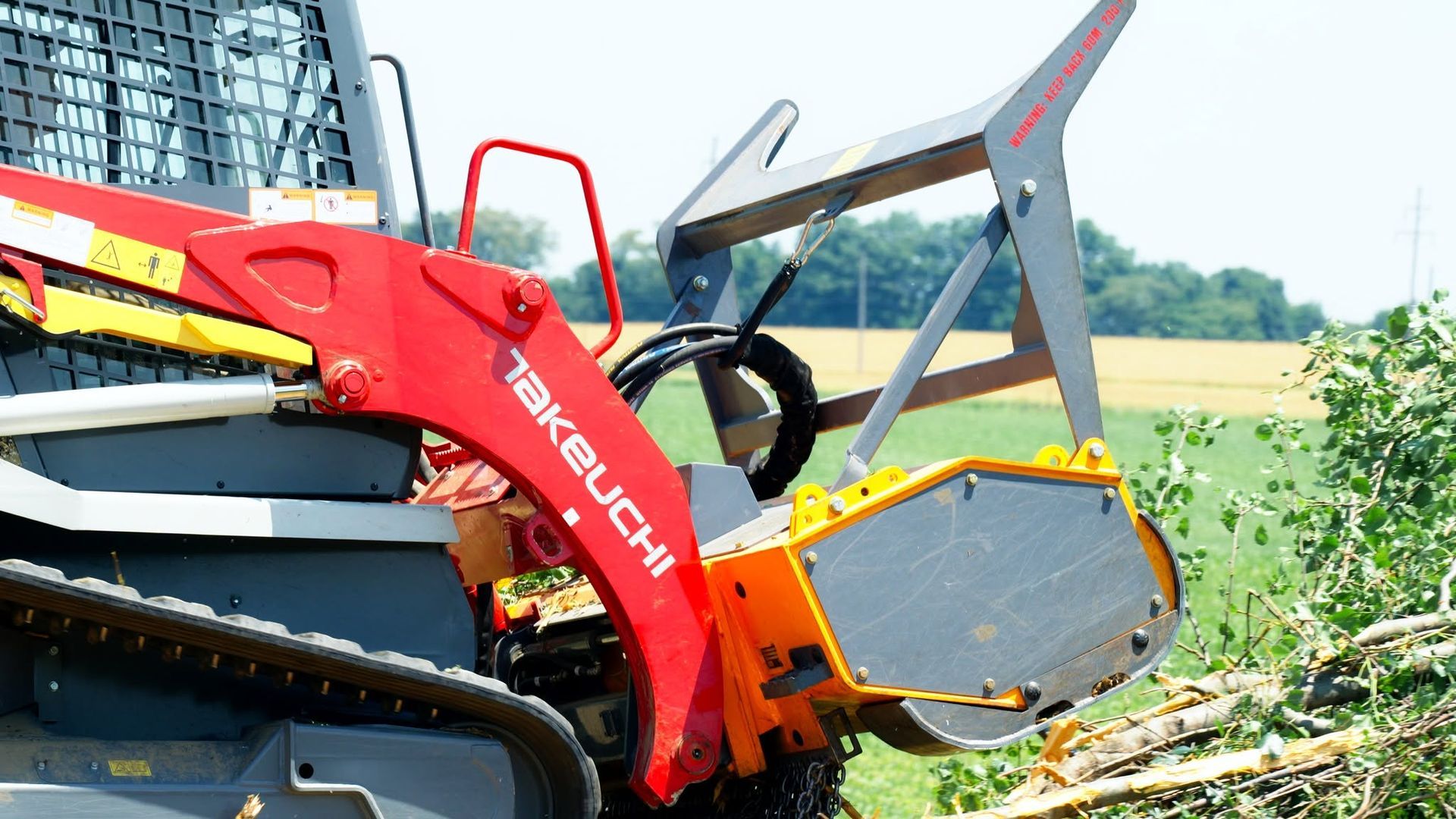
What Building Site Clearing Actually Prepares
The forestry mulching head processes the saplings and brush within the marked building envelope systematically, working across the area in overlapping passes until the zone is fully cleared to grade. Unlike a bulldozer push, which scrapes topsoil into windrows and leaves compacted subsoil exposed, the mulching operation keeps the soil profile intact beneath the chip layer. This matters for two reasons: the cleared site drains and behaves more predictably in the period between clearing and builder mobilization, and your builder is not starting with degraded topsoil that a scrape-and-push approach commonly leaves behind.
Once the clearing pass is complete, the building envelope is visibly defined. The property owner can walk the footprint, confirm that the proposed home placement works with the surrounding trees and setbacks, and provide that spatial information to the architect or builder before finalized plans are drawn. Land Clear provides this cleared footprint without committing the site to a specific grade—the pad preparation, grading, and utility rough-in follow from the builder in the next phase after the design is confirmed.
The scope of this clearing covers the designated building area and does not include driveway corridors, septic field clearing, or perimeter brush unless those zones are included in the estimate discussion before work begins. Properties where the proposed building site includes existing large-diameter trees that cannot be processed by the mulching head may require that those specific trees be addressed separately before the mulching pass covers the surrounding area. Identifying those conditions during the estimate walk keeps the sequencing straightforward..
Questions Before Starting Your Site Preparation
These questions address how building site clearing works and what the land looks like once the footprint is opened.
What does Land Clear include in a building site clearing and what falls outside it?
The clearing covers saplings and brush within the building footprint you mark out on site; grading, pad preparation, and utility rough-in are separate work handled by your builder after clearing is complete.
How is the building envelope marked before the machine starts?
The crew walks the proposed footprint with you before any equipment operates, confirming corners and boundaries so the mulching head works only within the area you have selected for clearing.
Why does forestry mulching preserve the soil grade when other clearing methods disturb it?
The mulching rotor processes vegetation at the surface without the scraping blade passes that a bulldozer uses, which means the natural soil elevation and topsoil layer remain where they are rather than being displaced into piles.
How do Evansville-area parcels with dense sapling regrowth typically develop that growth pattern?
Parcels in this region that were previously farmed or grazed and then left unmanaged for five or more years commonly develop dense stands of volunteer saplings—particularly species like silver maple, box elder, and elm—that establish quickly in disturbed or open soil and reach mulchable diameter within a few seasons.
What should the property owner confirm with the builder before scheduling the clearing?
Knowing the approximate building footprint dimensions and any setback requirements from the county or municipality before the clearing estimate allows the crew to mark the correct area and avoid clearing outside the intended building envelope.
Land Clear also prepares building sites in Henderson, Owensboro, Princeton, Mount Vernon, and Newburgh. Call (812) 562-5263 to schedule a free estimate and walk your proposed building site with the crew before work begins.