
Dense Brush Processed Down to Ground Level
Forestry mulching in Evansville for overgrown parcels where saplings and vegetation have made land unusable
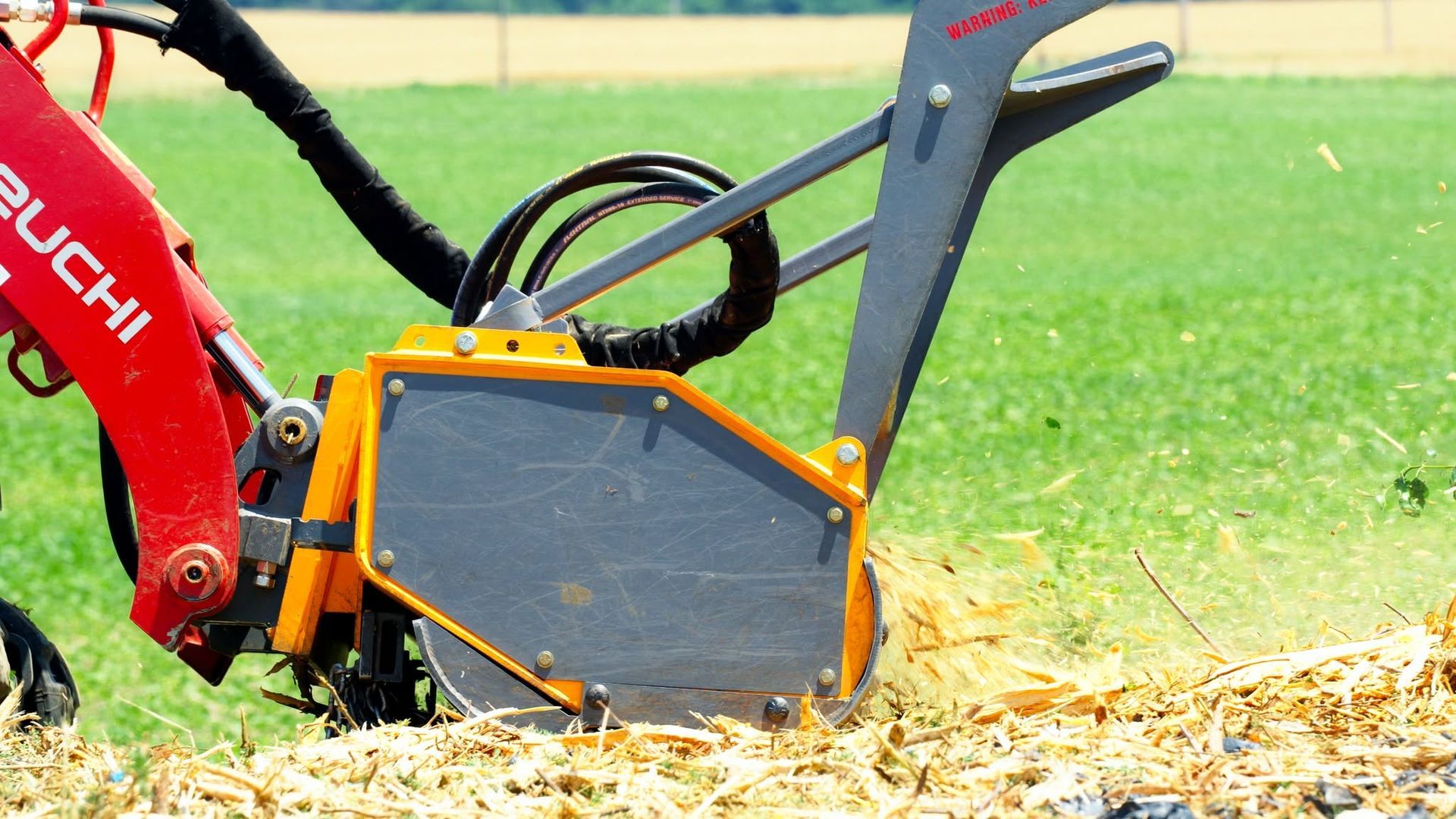
A specialized mulching head that grinds saplings and overgrown brush down in place—without hauling, without burning, without hand cutting—is what separates forestry mulching from every other vegetation clearing method available. Land Clear operates this equipment across Evansville and within a 60-mile radius, handling properties where dense sapling stands and years of unchecked brush growth have made the land inaccessible or unworkable. The machine processes vegetation in a single pass and leaves wood chips on the ground where they break down and improve soil structure over time.
The mulching head mounts on a compact machine that can navigate most parcels without requiring a pre-cut access path. Once the crew arrives and the work area is marked, the equipment moves through the vegetation systematically—contacting brush and saplings, reducing them to chips, and depositing that material on the ground in the same motion. No debris needs to be staged, stacked, or scheduled for removal because nothing leaves the property.
Arrange a free estimate to review the scope of your property and confirm what the mulching operation will address.
What the Mulching Process Actually Involves on Your Property
The carbide teeth on a forestry mulching head rotate at speeds that allow them to shred woody material—including saplings up to several inches in diameter—on contact. That capacity means a single machine replaces the combination of chainsaw crews, chippers, loaders, and haul trucks that conventional clearing requires. For properties in the Evansville area that contain dense stands of invasive saplings mixed with thick brush understory, the single-pass approach is significantly more efficient because the machine does not need the brush pre-cut before processing the larger stems.
Once Land Clear finishes a mulching operation, the property surface looks and functions differently than it did before. The standing vegetation is gone, the ground is accessible, and a layer of wood chips covers the surface rather than bare compacted soil. That chip layer is not cosmetic—it holds moisture, prevents erosion on slopes, and feeds soil biology as it decomposes. Property owners who have previously had land cleared by excavation or scraping often notice that mulched areas recover more quickly for planting or other uses.
Land Clear is a family-owned, insured operation with years of specializing in forestry mulching work. The company's five-star Google reviews and consistent review response practice reflect how it handles every project, not just the equipment it brings to the job.
Answers About How Forestry Mulching Works
These questions focus on the mechanics of forestry mulching, what the equipment handles, and what property conditions the process is best suited for—including the dense sapling growth common on idle rural parcels throughout this region.
How does a forestry mulching head differ from a standard brush cutter?
A brush cutter cuts vegetation at or near the base and leaves material on the ground for separate disposal. A mulching head simultaneously cuts and chips the material, reducing it to small particles in one motion—no secondary handling, no piles, and no additional equipment needed to process what the machine contacts.
What happens to the wood chips after the mulching is complete?
Chips remain on site and begin breaking down through natural decomposition. Over several months, the material integrates into the soil surface, adding organic matter and improving fertility—which is why mulched land tends to support vegetation better afterward than land cleared by mechanical scraping or burning.
Why does the crew not need to pre-cut the area before the mulching machine arrives?
The mulching head is designed to handle a range of vegetation sizes in a single pass. Pre-cutting would add labor and cost without improving the outcome because the machine processes sapling stems and brush simultaneously rather than requiring a cleared path first.
What property types and parcel conditions is forestry mulching suited for?
It works well on rural acreage, idle lots, and wooded parcels where sapling encroachment has built up over years—conditions common on properties throughout the Evansville area and on larger rural tracts. Flat and moderately sloped ground are both workable; the compact machine can navigate most parcel layouts without requiring significant site preparation.
What quality indicators should a property owner look for after a forestry mulching job is finished?
The cleared area should be uniformly accessible with no standing brush or saplings remaining in the designated zone. Chips should be distributed across the ground surface rather than piled in mounds, and there should be no large woody debris left unprocessed. The perimeter between the cleared area and the surrounding vegetation should follow the boundary you specified.
Land Clear also provides forestry mulching in Henderson, Owensboro, Princeton, Mount Vernon, and Newburgh. To discuss your property and schedule a no-cost estimate, call Land Clear at (812) 562-5263.