
Fence Lines Hidden by Brush Finally Made Visible
Fence line clearing in Evansville for property boundaries overgrown with saplings and woody brush
A fence line buried in brush is not just a maintenance problem—it becomes a boundary problem. When saplings root along a property edge and go unchecked for several seasons, the physical fence structure can become inaccessible, the boundary itself difficult to trace, and the posts subject to pressure from encroaching root systems and vine growth. Land Clear uses a forestry mulching machine to clear overgrown fence lines along rural and residential properties in Evansville, chipping all material on site so the cleared corridor is immediately usable and requires no secondary cleanup. Property owners who have not been able to walk their own fence line in years are typically surprised by how much fence condition they can assess once the brush is removed.
The crew arrives with a forestry mulching machine fitted with a mulching head that processes saplings and brush in a single pass along the fence corridor. All material is chipped at the point of contact and stays on the ground as wood chips rather than being piled for hauling or burned. For older rural properties common throughout this area—many with fence lines originally established decades ago and never mechanically maintained—the machine can clear what would otherwise require days of hand labor, working along the line efficiently without removing the fence itself or disturbing the surrounding soil.
Request a free estimate from Land Clear to review the length and current condition of the fence line before scheduling work.
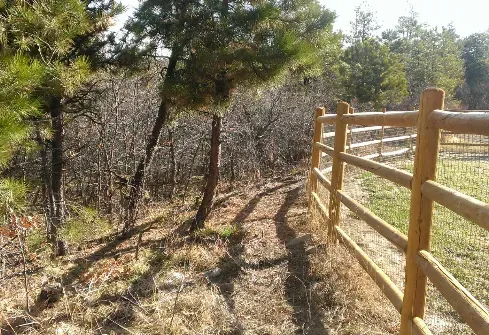
What the Clearing Process Actually Involves
The mulching head operates close enough to clear brush that has grown directly into fence wire and around posts without pulling or cutting the fence structure itself. This is a meaningful distinction from manual clearing with chainsaws and hand tools, where cutting near wire creates safety hazards and slows progress considerably. The machine processes saplings, vines, and dense brush in one continuous movement along the line, and the width of the cleared corridor can be adjusted depending on how much buffer the property owner wants on each side of the fence.
Once the pass is complete, the fence line is visible from end to end. Posts that were obscured can be inspected for condition. Gate locations become accessible. The wood chip layer left behind decomposes naturally and does not create a secondary debris problem the way cut brush piled along a fence line would. Land Clear completes most residential and rural fence line jobs in a few hours depending on total length and how densely the brush has established itself.
Fence line clearing handles the vegetation between and around posts, but it does not include fence repair, post replacement, or structural work on the fence itself. If the clearing reveals sections that need repair, that work would be coordinated separately after the brush is removed and the full fence condition can be assessed. This sequencing—clear first, inspect, then repair—is the most efficient approach for properties where the fence condition is currently unknown because of overgrowth..
Answers About How Fence Line Clearing Gets Done
These questions address the specifics of how forestry mulching equipment handles fence line work and what the cleared corridor looks like when finished.
How close can the mulching head operate to an existing fence without damaging it?
The operator controls the head precisely enough to clear brush growing directly against wire and posts, though working near older wire fencing requires careful positioning to avoid contact with the cutting rotor.
What happens to the wood chips left along the fence line after clearing?
Chips remain on site and break down over one to two growing seasons, returning organic material to the soil without creating a debris pile that needs secondary removal.
How does vine growth along a fence line affect the clearing process?
Vines that have threaded through fence wire are processed by the mulching head at the stem, which separates the vine from its root system and removes the canopy, though deep-rooted invasive vines may require follow-up if they resprout from the base.
What determines how wide the cleared corridor will be along the fence?
The corridor width is set based on what the property owner specifies before work begins, with wider clearance requiring additional passes beyond the fence centerline but staying within the area confirmed on site.
How do Evansville-area rural properties typically develop such dense fence line brush?
Many rural properties in this region have fence lines that have not been mechanically maintained since the original installation, and species like hedge apple, honey locust, and multiflora rose establish quickly along undisturbed corridors and become dense within a few seasons.
Land Clear also clears fence lines in Henderson, Owensboro, Princeton, Mount Vernon, and Newburgh. Call (812) 562-5263 to describe your property boundaries and schedule a free on-site estimate.