
Food Plots Opened Without Compacting or Stripping Soil
Hunting plot clearing in Evansville for rural parcels where saplings and overgrowth have taken over planting or wildlife access areas
Rural parcels outside Evansville that were once maintained as food plots or wildlife openings can close back in quickly when sapling growth goes unchecked for a few seasons. Land Clear clears hunting plots using forestry mulching equipment that chips down saplings and overgrown vegetation in the plot area you designate, leaving wood chips on site that decompose and add organic matter to the soil rather than leaving bare, compacted ground behind. The cleared plot is ready for planting or wildlife access after a single operation—no debris hauling, no burning, and no follow-up work required.
The crew arrives with the mulching machine, follows the plot boundaries the property owner specifies, and processes the vegetation in one systematic pass. Because the machine handles everything from small saplings to dense brushy growth without requiring pre-cutting, the operation is faster than hand-clearing methods and does not disturb the soil structure the way mechanical scraping or excavation would. That matters for food plot performance: soil that retains its organic layer supports seed germination and plant establishment better than compacted bare ground.
Request a free estimate before the season starts so the crew can assess your plot area and plan the clearing operation.
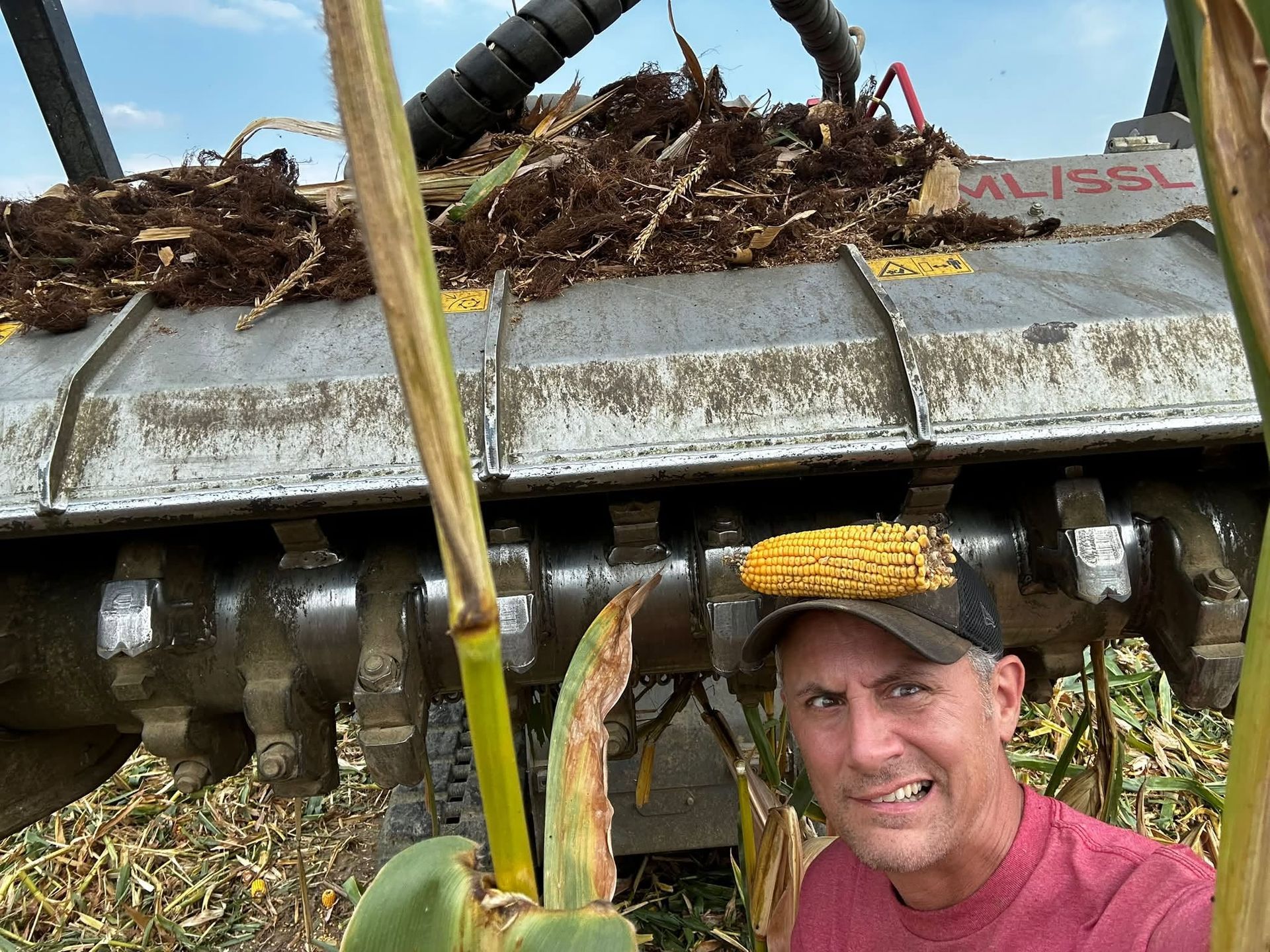
What Proper Hunting Plot Preparation Actually Requires
Opening a food plot is not just about removing what is growing there now—it is about leaving the ground in a condition that supports what you want to grow next. Forestry mulching handles both sides of that requirement: the mulching head removes the existing vegetation completely, and the chips it deposits begin returning organic matter to the soil immediately. That is a different starting point than a plot cleared by burning, which removes organic material, or by mechanical scraping, which removes topsoil along with the vegetation.
After Land Clear finishes a hunting plot clearing, you can walk the area, confirm the boundaries match your plan, and prepare the surface for seeding without waiting for debris removal or cleanup. The chip layer settles relatively quickly and can be worked into the soil surface during plot preparation, or left to decompose on its own if the plot will be managed as a natural browsing area rather than a planted food source. Either way, the organic matter in the chips improves soil fertility over time.
Land Clear is a family-owned, insured operation with over a decade clearing land and offers free estimates within a 60-mile radius of Evansville. Properties in areas like Tell City and Jasper, where rural acreage with idle saplings and encroaching brush is common, fall within that service range..
Questions Before Starting Your Hunting Plot Project
These questions address how hunting plot clearing using forestry mulching actually works, what the equipment handles, and what a property owner should expect from the cleared area when the operation is complete.
How does forestry mulching affect the soil in a way that benefits a food plot afterward?
The wood chips left on the ground after mulching decompose and return carbon and nutrients to the soil surface. This contrasts with burning, which volatilizes organic matter, or scraping, which physically removes topsoil—both of which leave the plot starting from a depleted baseline rather than an enriched one.
What sapling sizes can the mulching head process during a plot clearing?
The equipment handles saplings in the diameter range typical of invasive re-growth—species like persimmon, sweetgum, and cedar that colonize idle rural parcels throughout this region. Stems several inches in diameter can be processed without requiring pre-felling, which is the key efficiency advantage over hand clearing for established sapling stands.
How should a property owner mark or communicate the plot boundaries before the crew arrives?
Flag tape, stakes, or a GPS boundary shared with the crew are all workable methods. The clearer the boundary, the more precisely the operator can follow it, particularly along edges adjacent to timber you want to preserve. Walking the perimeter with the operator before work starts is the most reliable way to confirm the intended clearing area.
What does the plot surface look like immediately after the clearing operation finishes?
The plot is open and accessible at ground level. A layer of wood chips covers the surface where vegetation stood, there are no unprocessed stems or piles, and the soil beneath is intact rather than disturbed or scraped. The area is ready for the next step in your plot preparation—whether that is broadcasting seed, working the soil surface, or installing any supplemental feeding.
Why does forestry mulching work better than hand cutting for re-growth sapling stands in food plots?
Hand cutting leaves stumps that re-sprout aggressively, requiring repeated follow-up. The mulching head reduces stems to chips at and below grade, which interrupts the re-sprouting cycle more effectively and reduces the frequency of future maintenance clearing on the same plot area.
Land Clear also clears hunting plots in Henderson, Owensboro, Princeton, Mount Vernon, and Newburgh. To set up a free estimate for your property, call Land Clear at (812) 562-5263 and describe the plot size and current vegetation conditions.